
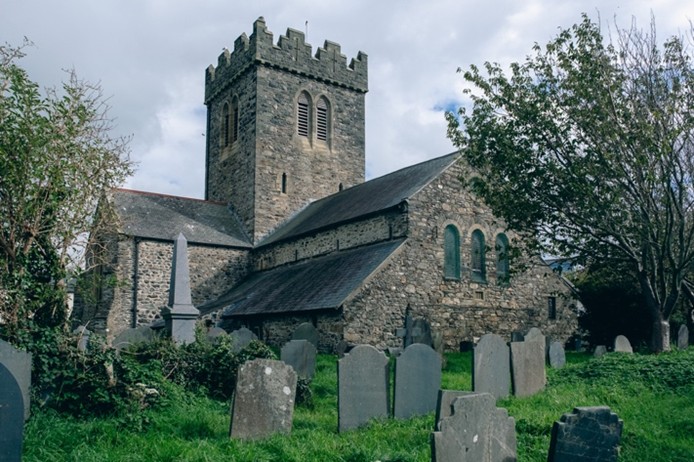
St Cadfan
Founded around 516 AD, St Cadfan’s is one of the oldest Christian sites in Wales. According to tradition, the saint arrived from Brittany and established a small clas (monastic community) here, laying the foundations for what would become an important place of Christian study and worship.
The church you see today is largely Norman in style, dating back to the 11th century, and offers a fascinating glimpse into early medieval architecture.
Inside is the Cadfan Stone, whose inscription is widely recognised as the earliest known example of written Welsh – making the church of special significance in the development of the language.
Location: College Green, Tywyn, LL36 9BS.
W3W: https://w3w.co/salaried.rivers.crowds
Opening times: 9am-5pm daily April-September;10am-4pm daily October-March.
Parking on-road or nearby car park at Ffordd Eglwys Bach, Tywyn LL36 9DJ.
Bro Ystumanner Ministry: https://www.broystumanner.com/st-cadfan-home
Coflein: https://coflein.gov.uk/en/sites/43861
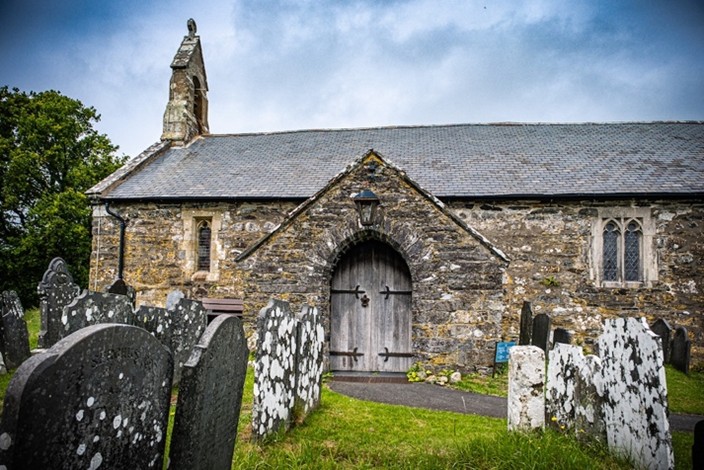
St Mary & St Egryn
Set within the beautiful landscape of the Dysynni Valley, this ancient church is known for the warm welcome it extends to pilgrims and visitors.
Inside, you’ll find a beautifully carved medieval rood screen - one of the finest surviving examples in Wales. According to local legend, this remarkable screen was brought here from Cymer Abbey during the Dissolution of the Monasteries, making this historic site even more intriguing to explore.
Location: A mile NW of Llanegryn village, LL36 9SW
W3W: https://w3w.co/joined.action.magazines
The church is open seven days a week; for queries contact the Churchwarden on 01654 710630.
Limited on-road parking around the church.
There is a toilet in an outbuilding to the side of the church.
Bro Ystumanner Ministry Area Website
Coflein: https://coflein.gov.uk/en/sites/43890
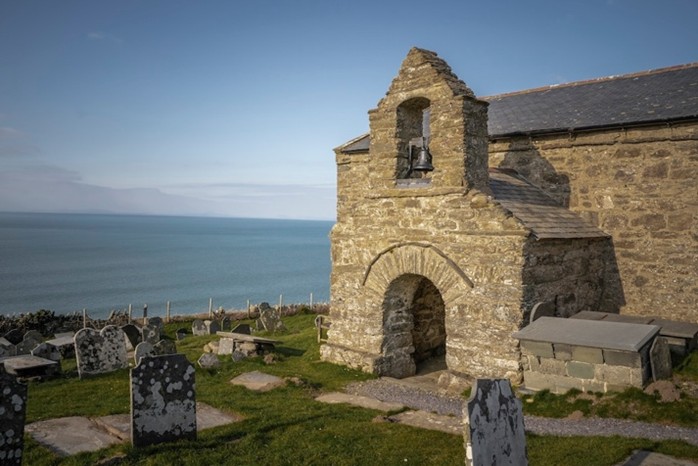
St Celynnin
Perched high above Cardigan Bay, Llangelynnin Old Church enjoys one of the most breathtaking and atmospheric settings of any medieval church along this coast. Its dramatic location alone makes it a memorable place to visit.
Traces of 17th-century wall paintings have been uncovered on the north wall. They include a striking Memento mori skeletal figure – the Latin phrase means ‘Remember you must die’ - the painting is designed to remind the viewer of their mortality and of the shortness and fragility of human life.
Location Old St Celynnin, Llangelynnin, LL37 2QL, on the A493 between Tywyn and Llwyngwril. Car access is limited; some roadside parking is available in a layby on the main road.
W3W: https://w3w.co/sidelined.shrugging.acrobatic
Open daily 10am-5pm.
Bro Ystumanner Ministry Area Website
Coflein: https://coflein.gov.uk/en/sites/43864
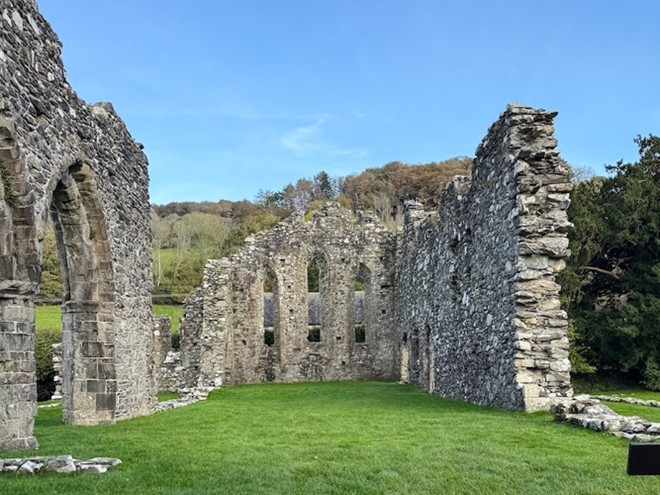
Cymer Abbey
Founded in 1198, Cymer Abbey is a fine example of the Cistercian presence in medieval Wales. As one of their smaller settlements, it faced significant challenges during the 13th-century conflicts between Wales and England and was eventually dissolved at the Reformation.
Today, visitors can explore the substantial remains of the abbey church, whose design reflects the Cistercians’ emphasis on simplicity and restraint.
W3W: https://w3w.co/compelled.mystified.educated
Small car park near entrance to site. No toilets.
Cadw Website
Coflein: https://coflein.gov.uk/en/sites/95420
St Mary & St Bodfan
Set above the shoreline with spectacular views across Cardigan Bay, this Grade II listed church dates mainly from the 13th century.
Inside, two Early Christian inscribed stones from the 5th–6th centuries - the Calixtus Stones - offering a glimpse into the area’s ancient past.
Behind the altar, the 1911 reredos reflects the influence of the Arts & Crafts movement and is particularly notable for having been carved by three women artists with links to the Suffragette movement.
Llanaber, LL42 1AZ.
W3W: https://w3w.co/zipped.rocky.variances
Open during daylight hours. The church is on the side of the A496 with a lay-by for parking close to the churchyard.
Diocese of Bangor Website
Coflein: https://coflein.gov.uk/en/sites/43859
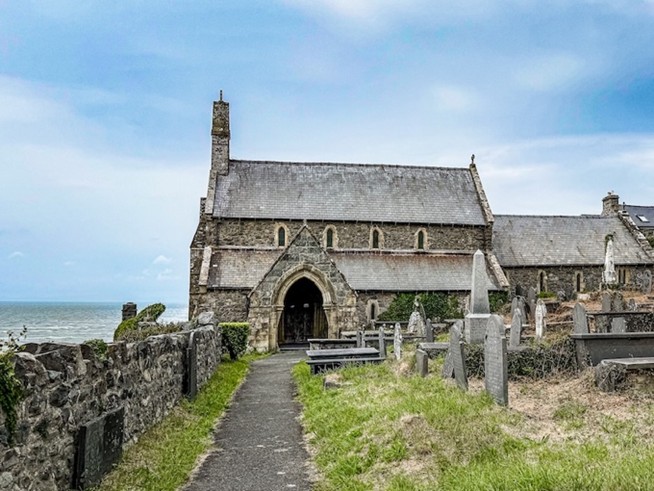
St Tanwg
Set among shifting sand dunes above the shoreline, St Tanwg’s is one of Wales’s most atmospheric historic sites. Medieval in origin, it houses some remarkable early Christian heritage, including three inscribed stones from the 5th–6th centuries, two carved crosses, and traces of wall paintings depicting saints and evangelists.
Outside lies the grave of the poet Sion Phillips, who drowned in 1620.
The church was abandoned in the 19th century as the sand dunes gradually encroached but has since been reclaimed.
Llandanwg, LL46 2SD.
W3W: https://w3w.co/carting.difficult.snore
Parking in the Pay and Display car park next to the church
Open during daylight hours. Keys are also held by the café by the car park – you can ask for them in the off season if the church is closed.
Diocese of Bangor Website
Coflein: https://coflein.gov.uk/en/sites/43901
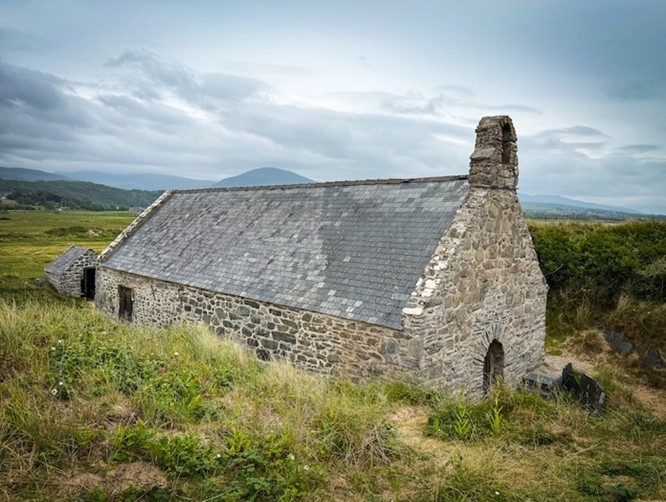
St Michael, Llanfihangel-y-Traethau
This small coastal church has a long history. A 12th-century inscribed stone in the churchyard records its origins: “Here is the tomb of Wleder, mother of Odeleu, who first built this church in the time of King Owain.”
Grade II listed with interesting modern stained glass; one window commemorating St Tecwyn in his coracle, and a stunning east window of 1958 depicting the Risen Christ designed by Joan Howson,
LL47 6TL. There is a small sign on the A496 in Ynys that points the way to the church.
W3W: https://w3w.co/couch.soups.dragons
The church is open during daylight hours. Park in the field alongside the churchyard entrance.
Diocese of Bangor Website: www.broardudwy.church/churches/llanfihangel-y-traethau/
Coflein: https://coflein.gov.uk/en/sites/43894
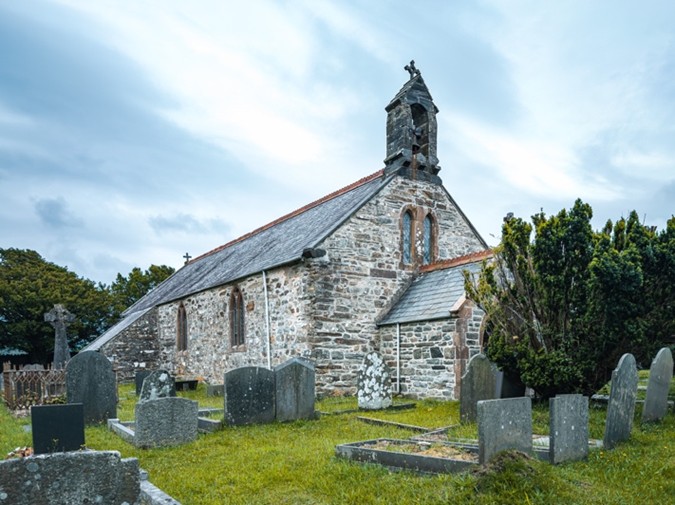
St Tecwyn, Llandecwyn
Set along a route that may date back to Neolithic times, the churchyard at Llandecwyn has stunning views across the Dwyryd Estuary towards Eryri and Cardigan Bay.
The present building was designed in 1880 by local architect Thomas Roberts, on a site where St Tecwyn is thought to have established a church in the 6th century. Built into the fabric of the church is an ancient inscribed stone, usually read as: “The Cross of St Tecwyn, presbyter, to the honour of God and the most illustrious servant of God, Heli, deacon, made me.”
LL47 6YT. There is a small parking area that is part of a field next to the churchyard and a car can be turned around at this point. You can also park by the lower lake; if the ground is wet parking higher up can be tricky. Then a steep walk up a tarmac road to the church.
W3W: https://w3w.co/imperious.dizziness.lanes
St Tecwyn's is open for visitors during daylight hours.
www.broardudwy.church/churches/st-tecwyn-llandecwyn/
Coflein: https://coflein.gov.uk/en/sites/43903
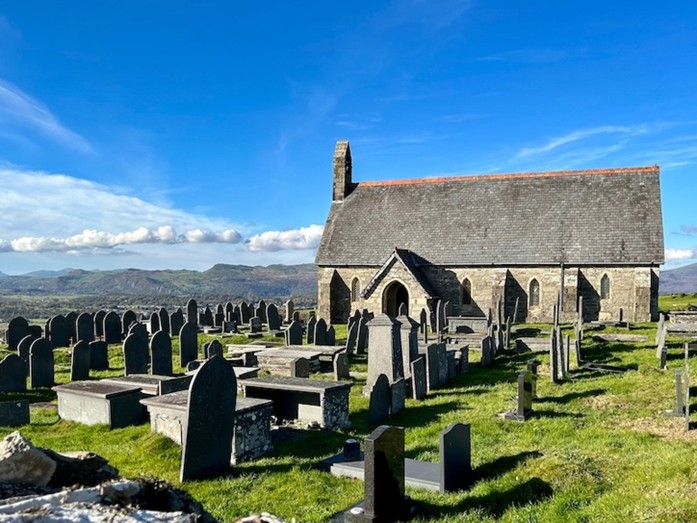
Holy Trinity, Penrhyndeudraeth
Holy Trinity is a warm and welcoming church built in 1858 to the design of architect T. M. Penson. Inside, there is a good collection of stained glass, including a rare depiction of St Paul preaching at Athens.
The churchyard offers a green retreat within the busy village and is a haven for wildlife, with more than 80 different species recorded there.
Church Place, Penrhyndeudraeth, LL48 6LG.
W3W: https://w3w.co/scribble.whizzing.twists
Open 10am-4pm all year round.
Coflein: https://coflein.gov.uk/en/sites/43842
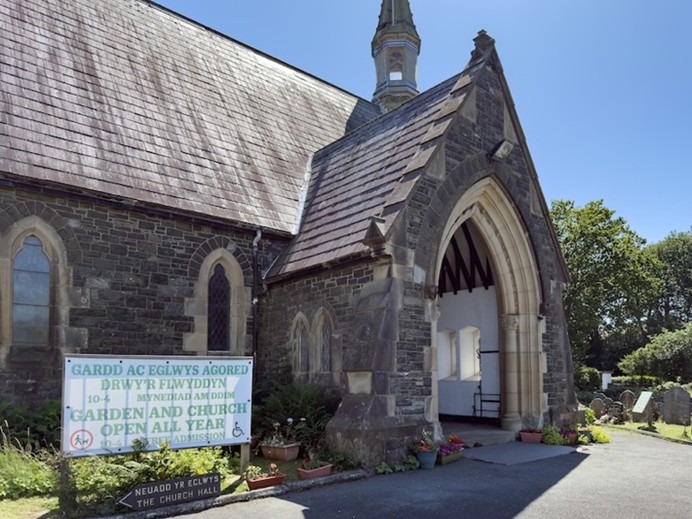
St Cyngar, Borth-y-Gest
Dedicated to the early Welsh saint Cyngar, this small early 20th-century church was built in 1913 to the designs of architect Harold Hughes. Set above the estuary near Porthmadog, it is constructed from dark local stone and has a simple but distinctive Arts and Crafts character.
Church Rd, Borth-y-Gest, Porthmadog LL49 9TU
W3W: https://w3w.co/moth.guideline.plunger
Open:10-4pm daily.
Coflein: https://coflein.gov.uk/en/sites/43719
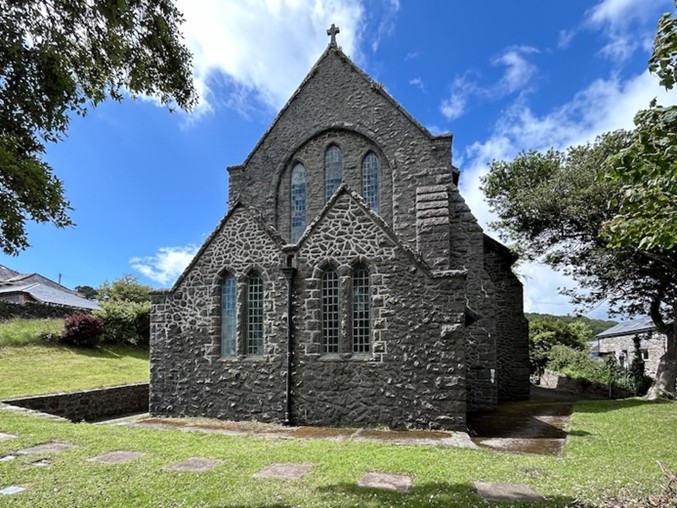
St Cynhaearn, Ynyscynhaearn
St Cynhaearn's is a well-preserved late-Georgian estate church (1832), with tiered pews painted with the names of local estate families, a triple-decker pulpit, and fine stained glass by Powell & Sons.
The churchyard contains the grave of John Ystumllyn (Jac Du/Jack Black), brought from Africa around 1742 to serve the Wynne family, as well as that of Dafydd y Garreg Wen, harpist and composer.
Location Ynyscynhaearn, Pentrefelin, LL52 0PT.
W3W: https://w3w.co/newer.years.dean
The church is accessed via a narrow gate, just wide enough for a car, off the main road. It is hard to spot, so look out for two stone gate posts.
Please note that the latch sometimes sticks in wet weather, making the door difficult to open and please ensure that you close all gates behind yourself to protect the farmers’ livestock.
friendsoffriendlesschurches.org.uk/church/st-cynhaearns-ynyscynhaearn-gwynedd/
Coflein: https://coflein.gov.uk/en/sites/43720
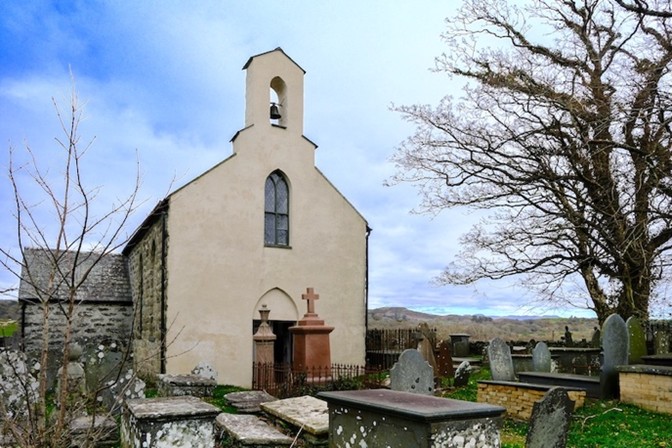
St Catherine, Cricieth
This Grade II* listed church dates from the late medieval period and was carefully restored in the 1870s, retaining much of its original character.
Inside, finely turned 18th-century communion rails complement an ornate reredos of 1679, carved with flowers and wheat sheaves. Colourful Victorian stained glass, a 19th-century pulpit, and slate memorial tablets dating from the late 1600s to early 1800s complete an interior of exceptional quality.
Location Ednyfed Rd, Cricieth, LL52 0RE. On road parking nearby.
W3W: https://w3w.co/teardrop.speedy.somewhere
Open: 10-4pm daily.
Coflein: https://coflein.gov.uk/en/sites/11898
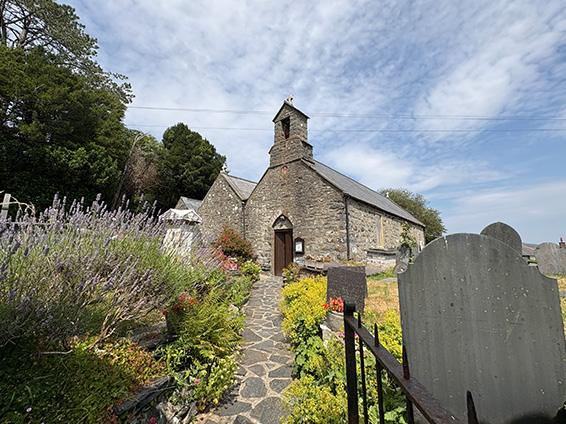
St Cybi, Llangybi
Dedicated to St Cybi, a 6th-century Cornish missionary, this Grade II* listed church retains its medieval nave despite a Victorian restoration in 1879.
Set into the rear pew is an unusual 17th-century poor box – an octagonal hollowed post with a hinged lid – used to collect alms for parishioners in need.
On the north wall, is a memorial to John Clough Williams-Ellis, most likely designed by his son, Clough Williams-Ellis, the architect of Portmeirion. In the churchyard is the grave of the poet Dafydd Owen (Dew Wen o Elfin), one of several bards who made this area a centre of Welsh literary life in the early 19th century.
As you leave, look out for the Early Christian stone cross, dating from the 7th–9th century, set into the lychgate.
Location Llangybi, Pwllheli LL53 6LZ.
W3W: https://w3w.co/hype.resolves.comb
Parking for 1 car to the left of the lych gate. Follow round the churchyard wall for limited parking beside the stone stile entrance.
Coflein: https://coflein.gov.uk/en/sites/43717
13a St Cybi’s Well, where Cybi is said to have struck a stone to bring healing waters to the surface.
Access is via a footpath from the NE corner of St Cybi’s churchyard, then across two fields, partly by a causeway.
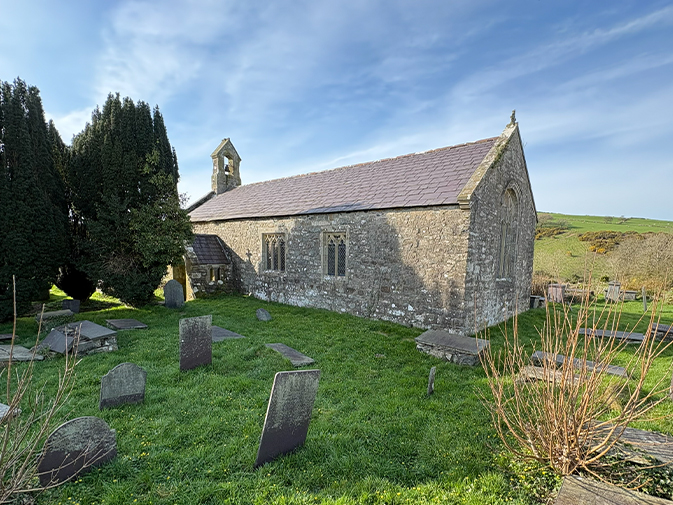
St Cawrdaf, Abererch
Dedicated to Cawrdaf, a little-known 6th-century royal saint, this Grade I listed church is a fine example of late medieval architecture characteristic of the Llŷn Peninsula, with a roof structure considered among the best of its kind in the region.
The 15th-century misericords in the north aisle are rare survivors – lift them to reveal carvings of roses, lilies, and upturned masks.
By the door stands a 15th-century parish chest, carved from a single piece of wood, once used to store the registers of births, deaths and marriages.
Location Abererch, Pwllheli LL53 6YT.
W3W: https://w3w.co/unstable.unite.reduction
On road parking around the church.
Open: 10-4pm. Access is usually by the side door of the church, not the main door facing you as you walk up the path from the entrance.
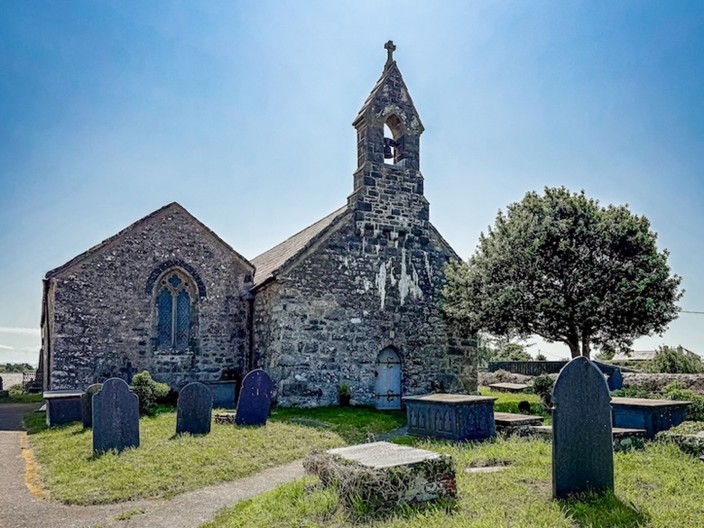
St Peter, Pwllheli
A church stood on this site as far back as the 6th century, founded by St Beuno or his disciples. By 1283, the town it served still numbered only 20 dwellings. The present building dates from 1887, designed by J. Oldrid Scott of London at a cost of £5,000.
The most striking features are the stained glass windows. The finest of these is the south aisle window of 1891, depicting the Presentation of Christ in the Temple.
Location Stryd-Y-Llan, Pwllheli LL53 5DS.
W3W: https://w3w.co/solutions.fools.foal
Very limited on-street parking – use local Asda or Penlan car parks.
https://broenlli.com/en/be_church/st-peters/
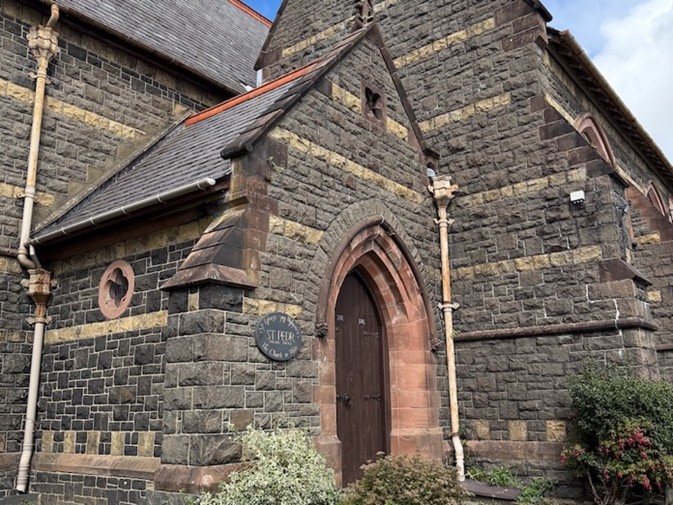
St Pedrog, Llanbedrog
Dedicated to a 6th-century missionary who established churches across Cornwall, Devon, Brittany and Wales, St Pedrog’s has roots going back to at least 1254.
Two stories from the church’s history stand out. During the Civil War, villagers dismantled the carved wooden rood screen and buried it in the sand of the nearby beach to save it from Parliamentary forces – it survives to this day. The original stained glass was not so lucky, but when the tower was added in 1895, a buried wooden box was found containing fragments of the east window; reassembled, this glass now forms the west window of the balcony.
Location Lon Nant-Iago, Llanbedrog, Pwllheli LL53 7TU.
W3W: https://w3w.co/processor.mandates.trading
Parking for one or two cars by the lychgate. Otherwise in the car park further down the road towards the beach.
https://broenlli.com/en/be_church/st-pedrogs/
Coflein: https://coflein.gov.uk/en/sites/43802
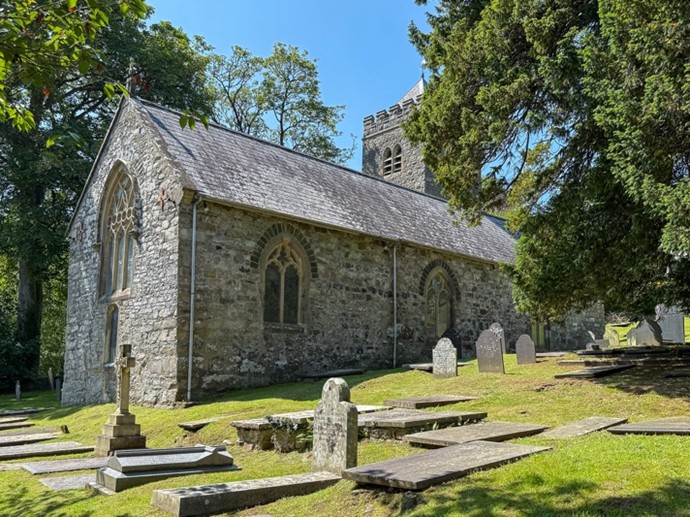
St Cian, Llangian
St Cian founded a church here in the 6th century. The vestry and porch are modern additions, but the west end may preserve fabric from the first church recorded here in the 13th century. The roof structure is 15th-century.
In the south churchyard stands a 5/6th-century stone inscribed: ‘MELI MEDICI FILI MARTINI I(a)CIT’ – ‘Melus, the doctor, son of Martinus. He lies here.’ Unusually, for a memorial of this period in Wales, the stone identifies the deceased by his profession.
Location Llangian, Pwllheli LL53 7LN.
W3W: https://w3w.co/snoozing.regrowth.bulletins
On road parking in the village.
https://broenlli.com/en/be_church/st-cian/
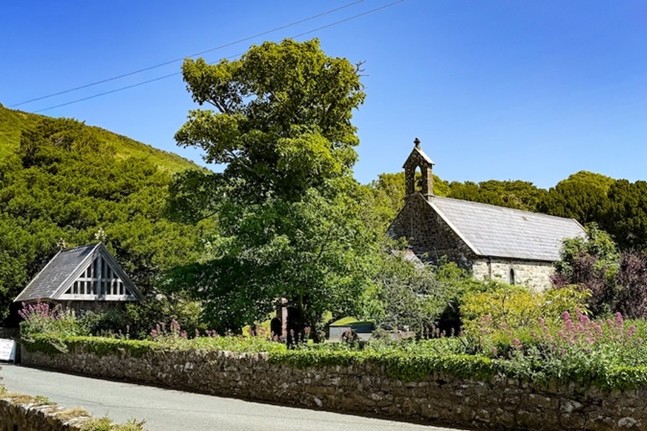
St Engan, Llanengan
One of the outstanding churches of Llŷn, St Engan’s is mainly 15th century in date, with a tower added in 1534 – just three years before Henry VIII dissolved the monastery on Ynys Enlli in 1537. The tower’s bells, the two ornate medieval screens and the large parish chest near the south door may all have originated there.
The two wooden screens are exceptional Early Tudor work. Look closely at the carving and you will find Christian symbols: the Instruments of Christ’s Passion, a snake, and a tree.
Two holy wells nearby have long been associated with healing.
Location Llanengan, Pwllheli LL53 7LL.
W3W: https://w3w.co/sprinkle.indulges.bumping
On-road parking around the village.
https://broenlli.com/en/be_church/st-engans/
Coflein: https://coflein.gov.uk/en/sites/43676
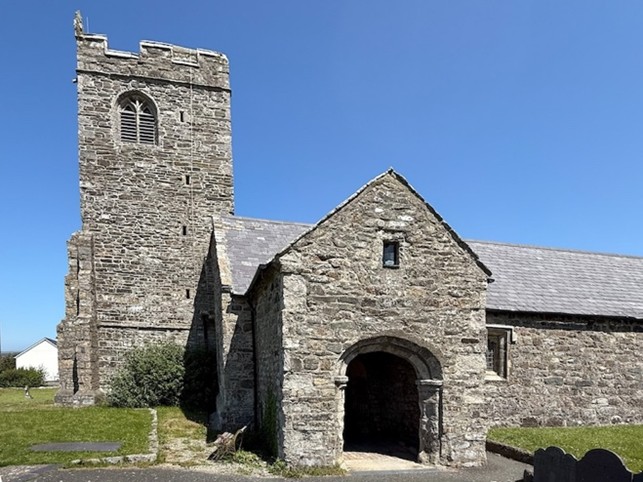
St Maelrhys, Llanfaelrhys
Founded by St Maelrhys, a 7th-century missionary, this tiny church stands in a commanding position between Mynydd Penarfynydd and the wild coastline with views over to Ynys Enlli. Its tall stone bellcote was used as a navigation mark by local fishermen.
The poet R.S. Thomas served as vicar here and at Aberdaron; an upstairs room now houses a collection of his books and pictures.
Location Llanfaelrhys LL53 8AN.
W3W: https://w3w.co/tilting.agree.swooned
On-road parking alongside the church.
https://broenlli.com/en/be_church/st-maelrhyss/
Coflein: https://coflein.gov.uk/en/sites/43798
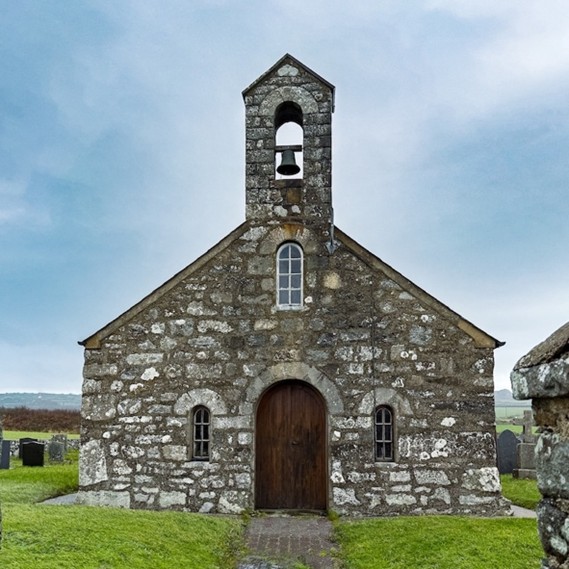
St Hywyn, Aberdaron
Since medieval times the Llŷn Peninsula has drawn pilgrims from across Wales and beyond, two ancient routes converging here at St Hywyn’s before their final journey to the Holy Island of Ynys Enlli.
St Hywyn came to Wales from Brittany in the 6th century as a companion of St Cadfan, establishing a monastic community at Aberdaron. Among the church’s most notable treasures are two 6th-century inscribed stones commemorating the priests Senacus and Veracius.
Location Aberdaron, Pwllheli LL53 8BE.
W3W: https://w3w.co/spokes.readily.denoting
Very limited parking by the church. Parking is recommended in the National Trust car park, a few minutes' walk away.
https://broenlli.com/en/be_church/st-hywyns/
Coflein: https://coflein.gov.uk/en/sites/43749

Ynys Enlli – Chapel and Abbey ruins
Location Ynys Enlli.
W3W: https://w3w.co/nylon.ladders.grief (chapel) and https://w3w.co/prepare.vineyard.eggshell (ruins)
The crossing by boat is dependent on weather conditions. Information and booking here: https://bardseyboattrips.com/
https://enlli.org/life-on-enlli/spirituality/
Coflein: https://coflein.gov.uk/en/sites/11577